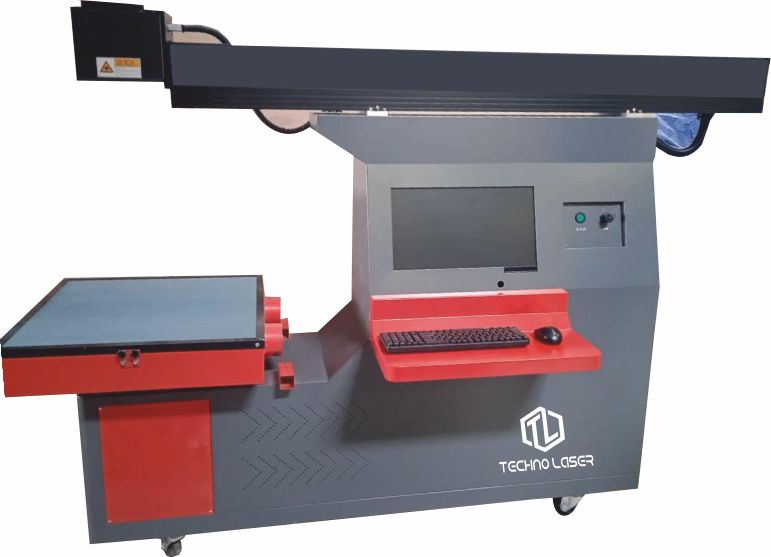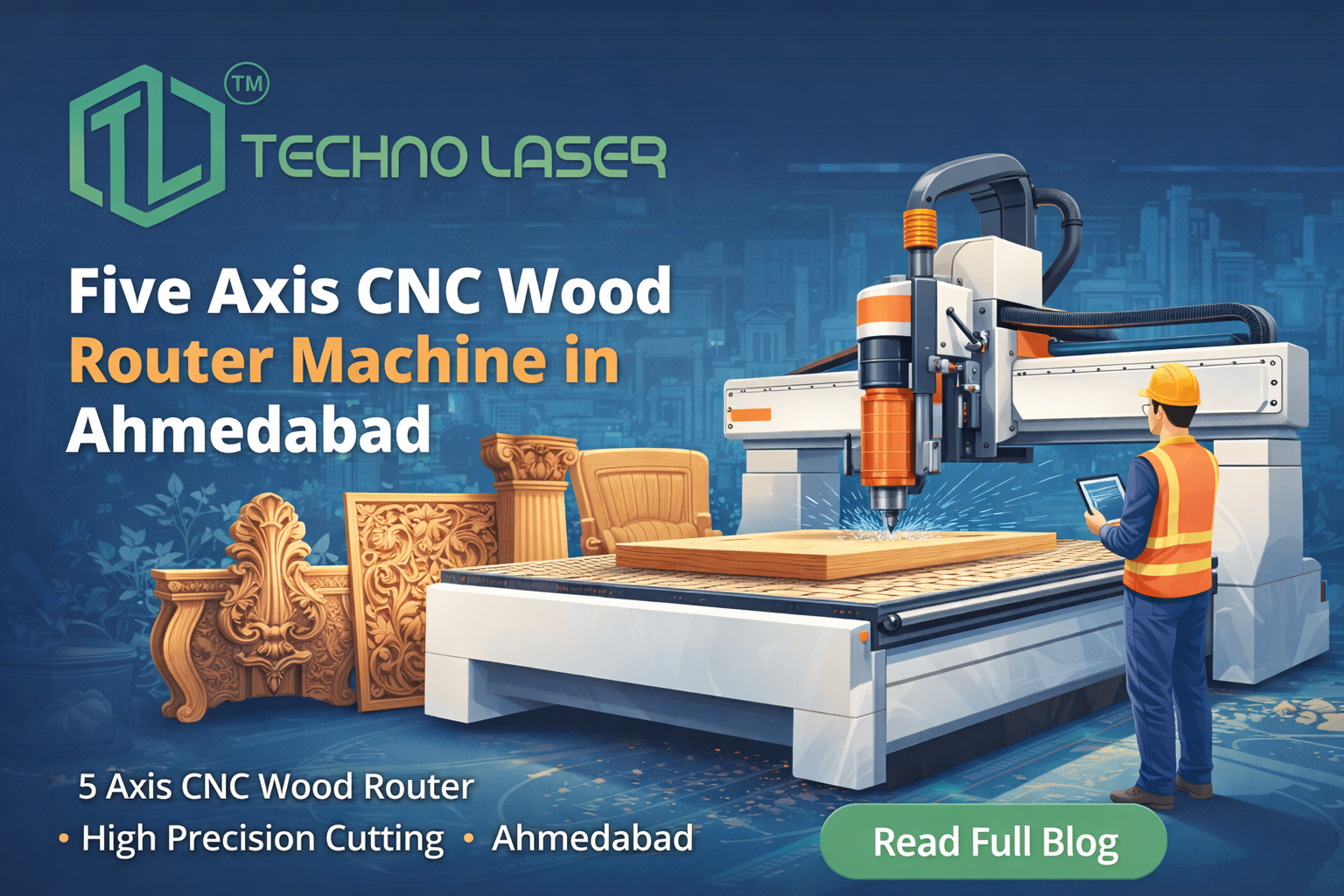
Five Axis CNC Wood Router Machines in Ahmedabad
These machines are designed to handle advanced multi-directional movements, enabling manufacturers to produce detailed components that are difficult to achieve with traditional routing systems. In Ahmedabad, a growing hub for industrial machinery and fabrication technology, the adoption of five axis CNC routers is steadily increasing. These machines support industries such as furniture manufacturing, interior design, architectural modeling, and decorative wood processing. Their ability to deliver consistent quality while reducing manual intervention makes them a practical solution for businesses aiming to improve productivity and precision.
Understanding Five Axis CNC Wood Router Technology
A five axis CNC wood router machine operates using computer numerical control systems that manage tool movement across five different axes. Unlike standard three-axis machines that move along X, Y, and Z directions, a five-axis system includes two additional rotational axes, allowing the cutting tool to approach the material from multiple angles. This enables the creation of complex geometries, curved surfaces, and detailed engravings in a single setup.
The integration of advanced CNC software ensures that the cutting process remains accurate and repeatable. By using digital design inputs, operators can achieve high consistency across production batches. The system reduces dependency on manual adjustments and allows precise control over cutting speed, depth, and tool paths.
Key Features of Five Axis CNC Wood Router Machines
Five axis CNC wood router machines are equipped with advanced components that enhance performance and reliability. These machines are built for continuous operation and are designed to maintain accuracy even under demanding industrial conditions.
- High precision linear guides ensure smooth and stable movement
- Advanced servo motor systems enable controlled and efficient operation
- Multi-axis spindle movement allows complex cutting angles
- Robust machine structure supports vibration-free performance
- Intelligent CNC control systems enable automated operations
- Compatibility with CAD/CAM software ensures design flexibility
These features collectively support high-quality finishes and consistent production standards.
Applications Across Woodworking and Manufacturing Industries
The versatility of five axis CNC wood router machines makes them suitable for a wide range of applications. Their ability to perform multi-directional cutting expands usability across industries that require detailed craftsmanship and structural accuracy.
- Furniture manufacturing including chairs, cabinets, and designer panels
- Interior décor elements such as wall panels, partitions, and moldings
- Architectural models and structural prototypes
- Wooden signage and branding elements
- Complex carvings and artistic woodwork
- Customized wood components for industrial applications
Role of Advanced CNC Systems in Productivity
Modern five axis CNC wood router machines are equipped with intelligent control systems that enhance productivity and operational efficiency. These systems allow operators to program complex designs and execute them with minimal manual intervention. Automation reduces the chances of human error and ensures consistent output across production cycles. The integration of high-speed processing units enables faster execution of cutting programs without compromising accuracy. This is particularly beneficial for industries that require high-volume production along with detailed finishing. The machine's ability to perform multiple operations in a single setup also reduces production time and material handling.
Why Ahmedabad is a Growing Hub for CNC Wood Router Machines
Ahmedabad has emerged as a key industrial center for manufacturing machinery, including CNC-based systems. The availability of skilled technicians, strong industrial infrastructure, and engineering expertise contributes to the growth of advanced machinery solutions in the region. The increasing demand from woodworking industries, furniture manufacturers, and construction-related sectors has created a strong market for CNC wood router machines. Businesses in Ahmedabad are adopting these machines to meet evolving design requirements and maintain competitive production standards. Additionally, the presence of engineering companies specializing in CNC technology ensures access to technical support, customization options, and maintenance services. This makes Ahmedabad a suitable location for sourcing and operating five axis CNC wood router machines.
Factors to Consider Before Choosing a CNC Wood Router Machine
Selecting the right five axis CNC wood router machine requires careful evaluation of technical and operational requirements. Businesses should consider multiple factors to ensure that the machine aligns with their production needs.
- Machine working area and size compatibility with project requirements
- Spindle power and speed based on material type
- Accuracy and positioning capabilities
- Control system and software compatibility
- Structural build quality for long-term durability
- After-sales support and technical service availability
Efficiency and Material Optimization
One of the key advantages of using a five axis CNC wood router machine is its ability to optimize material usage. Advanced tool path planning reduces waste and ensures efficient cutting patterns. This is particularly important in woodworking industries where material cost directly impacts overall production expenses. The precision of CNC systems minimizes errors and rework, leading to better utilization of raw materials. This not only improves cost efficiency but also supports more sustainable manufacturing practices.
Maintenance and Operational Reliability
Five axis CNC wood router machines are designed for long-term industrial use. However, proper maintenance is essential to ensure consistent performance and extend machine life. Regular inspection of mechanical components, lubrication of moving parts, and monitoring of control systems help maintain operational reliability.
Modern machines are equipped with diagnostic features that allow operators to detect potential issues early and take corrective action. This reduces downtime and supports uninterrupted production.
Future of CNC Wood Routing Technology
The future of CNC wood routing technology is focused on automation, precision, and integration with smart manufacturing systems. With advancements in digital design tools and automation technologies, five axis CNC machines are becoming more efficient and user-friendly. The adoption of Industry 4.0 principles, including data monitoring and real-time performance tracking, is further enhancing the capabilities of CNC systems. These developments are expected to drive continued innovation in woodworking and manufacturing industries.
Conclusion
The adoption of five axis CNC wood router machine in Ahmedabad reflects the growing need for precision-driven manufacturing solutions in woodworking industries. These machines offer advanced capabilities that support complex design execution, efficient production, and consistent quality. With the integration of modern CNC technologies, businesses can improve productivity and maintain competitive standards in an evolving industrial landscape.
Frequently Asked Questions
A five axis CNC wood router machine is used for cutting, carving, and shaping wood materials with high precision. It allows multi-directional movement, enabling complex designs and detailed finishes in a single setup.
A five axis CNC router includes additional rotational axes that allow the cutting tool to approach the material from multiple angles. This provides greater flexibility and enables the creation of complex geometries compared to three axis machines.
Yes, these machines are designed for industrial applications where precision, consistency, and efficiency are required. They are commonly used in furniture manufacturing, architectural work, and custom wood processing.
While primarily used for wood, these machines can also process materials such as MDF, plywood, acrylic, and certain composites depending on machine specifications.
CNC technology ensures accuracy, repeatability, and automation in woodworking processes. It reduces manual effort and allows the production of complex designs with consistent quality.
Performance depends on spindle power, machine structure, control system, software compatibility, and maintenance practices. Proper setup and operation also play an important role.
CNC routing automates the cutting process, reduces errors, and enables faster production cycles. It also minimizes material waste and ensures consistent output quality.