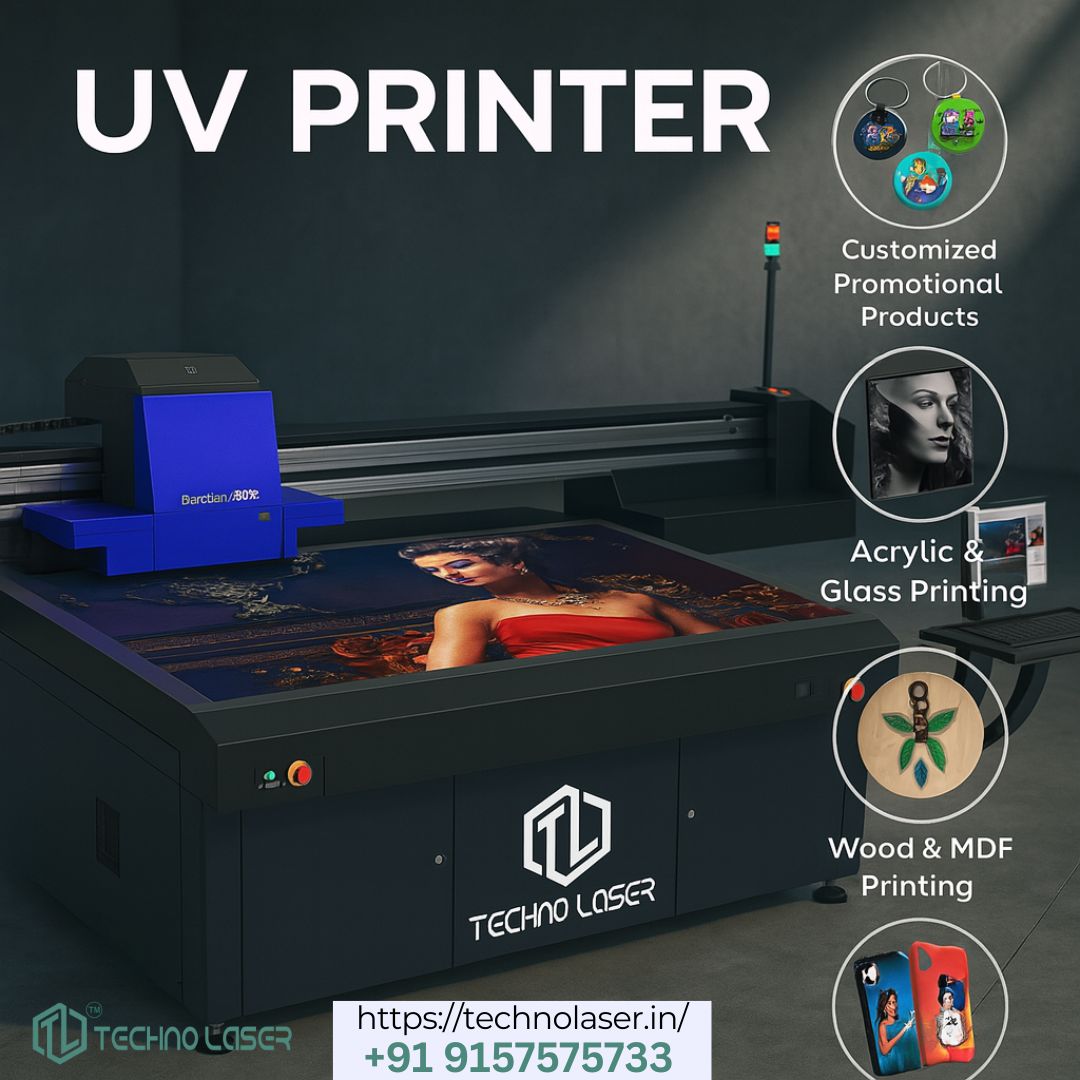
UV Laser Marking Machine for Glass
UV Laser Marking Machine for Glass
Introduction
UV laser marking at 355 nm enables crisp, permanent, and micro-fracture-free identification on glass using “cold” photochemical reactions. The tiny spot size and low heat-affected zone are ideal for tempered glass, borosilicate vials, ampoules, syringes, smartphone cover glass, cosmetic bottles, and optical components. Marks such as UIDs/QR/DM codes, logos, graduation scales, and anti-counterfeit micro-text appear frosted/whitish with excellent readability—without spalling, cracking, or compromising transparency when parameters and focus are optimized.
Working Principle & Process Flow
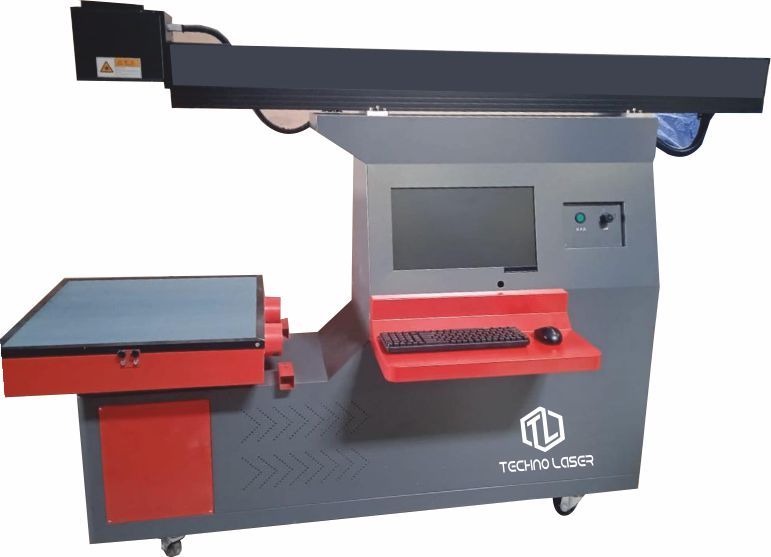
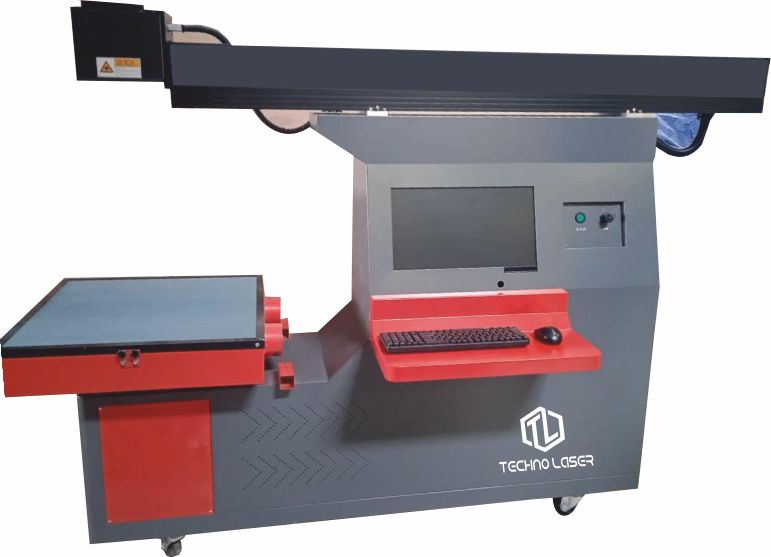
A DPSS UV source generates a 355 nm beam that is steered by high-speed galvos and focused through an F-Theta lens. On glass, short-wavelength photons drive photochemical color-center changes and micro-surface texturing, producing high-contrast frosted marks with minimal thermal stress. The operator loads vector art or variable data in the marking software, selects field lens, sets power/speed/frequency, and executes the job. For cylindrical parts (vials/ampoules), rotary axes ensure uniform marking; for in-line production, encoders/IO synchronize with conveyors. Optional vision systems perform code grading and position correction; dust extraction maintains optical cleanliness.
Applications & Benefits — Glass Marking
- Pharma packaging: graduation/lot/expiry on vials, ampoules, syringes, cartridges.
- Food & beverage: brand logos, batch/UID on bottles and jars (soda-lime/borosilicate).
- Consumer electronics: cover glass, camera windows, and connectors with micro text/2D codes.
- Automotive & appliances: tempered glass panels, switches, and indicator marks.
- Optics & instruments: scales on slides, cuvettes, lenses, and labware.
- Cold processing—minimal micro-cracks, no chipping; preserves strength and clarity.
- High-contrast frosted marks readable by humans and vision scanners.
- Non-contact, consumable-free, and highly repeatable for serial/UID/GS1 codes.
- Supports rotary/in-line systems for high-throughput pharmaceutical and FMCG lines.
Key Features
- 355 nm UV source (3–15 W) with ultra-fine spot for glass frosting and micro-engraving.
- F-Theta lenses for fields from ~70×70 to 200×200 mm; precise focus control for edge quality.
- High-speed galvos with stable beam quality for dense text and small DataMatrix/QR codes.
- Rotary axis and vision alignment options for vials, ampoules, and bottles.
- Automation I/O, encoder sync, and variable data (lot/date/UID/GS1) for in-line coding.
Where to Buy in India
Techno Laser supplies UV laser systems optimized for glass—covering pharma vials, beverage bottles, appliance glass, and precision optics. The team helps select optics, power, and rotary/conveyor integration, and sets safe process windows to avoid subsurface defects. Application trials, operator training, and service/AMC ensure stable production and consistent code grades on fast lines.
Maintenance & Safety Tips
Monthly / Quarterly
- Keep F-Theta lens and protective window spotless; verify galvo scan and focus height.
- Check rotary axis run-out for cylindrical glass; maintain exhaust filters and airflow.
- Back up job layouts and serial rules; keep firmware/software current per advisories.
Operating Best Practices
- Use proper enclosures and interlocks; align with laser safety class and labeling norms.
- Optimize energy density to avoid subsurface cracks; confirm with bend/anneal tests if required.
- Maintain stable fixturing and implement vision checks for code grade (ISO/ANSI).
FAQs — UV Laser Marking Machine for Glass
Q1 Will UV laser marking weaken tempered glass?
Q2 Can we mark around the curvature of small vials?
Q3 What field size gives the best edge quality?
Q4 How do we avoid chipping or flaking on soda-lime bottles?
Q5 Can UV marks be removed or altered?
Get in Touch
Technolaser • We’re here to help
Relevant Tags
- uv laser marking machine for glass
- uv laser coding on glass bottles
- uv laser marking for pharma vials
- uv laser on tempered glass
- uv laser for borosilicate glass
- rotary uv laser for ampoules
- uv laser datamatrix on glass
- uv marking for smartphone glass
- uv laser for appliance glass
- uv laser for cosmetic bottles
- uv glass laser marking price in india
- uv glass laser service amc india
Related Keywords

Quick Enquiry

Our Products
Popular Links
Get In Touch
28,B-Gaikwad Industrial Estate, Near Polaris Industrial Estate, Bakrol-Indore Highway, Kuha Ahmedabad - 382433, Gujarat, India.
technolaser11@gmail.com
+91 8200009229
+91 9157575733
© Techno Laser. All Rights Reserved.
Designed by industrieslead.com